

AI Pre-Visit Summary: Faster Patient Prep
A few minutes before a patient call, most clinicians go through the same routine. They open the patient's profile and click through past messages, visit notes, lab results, and old intake forms to piece together what's happened since they last spoke.
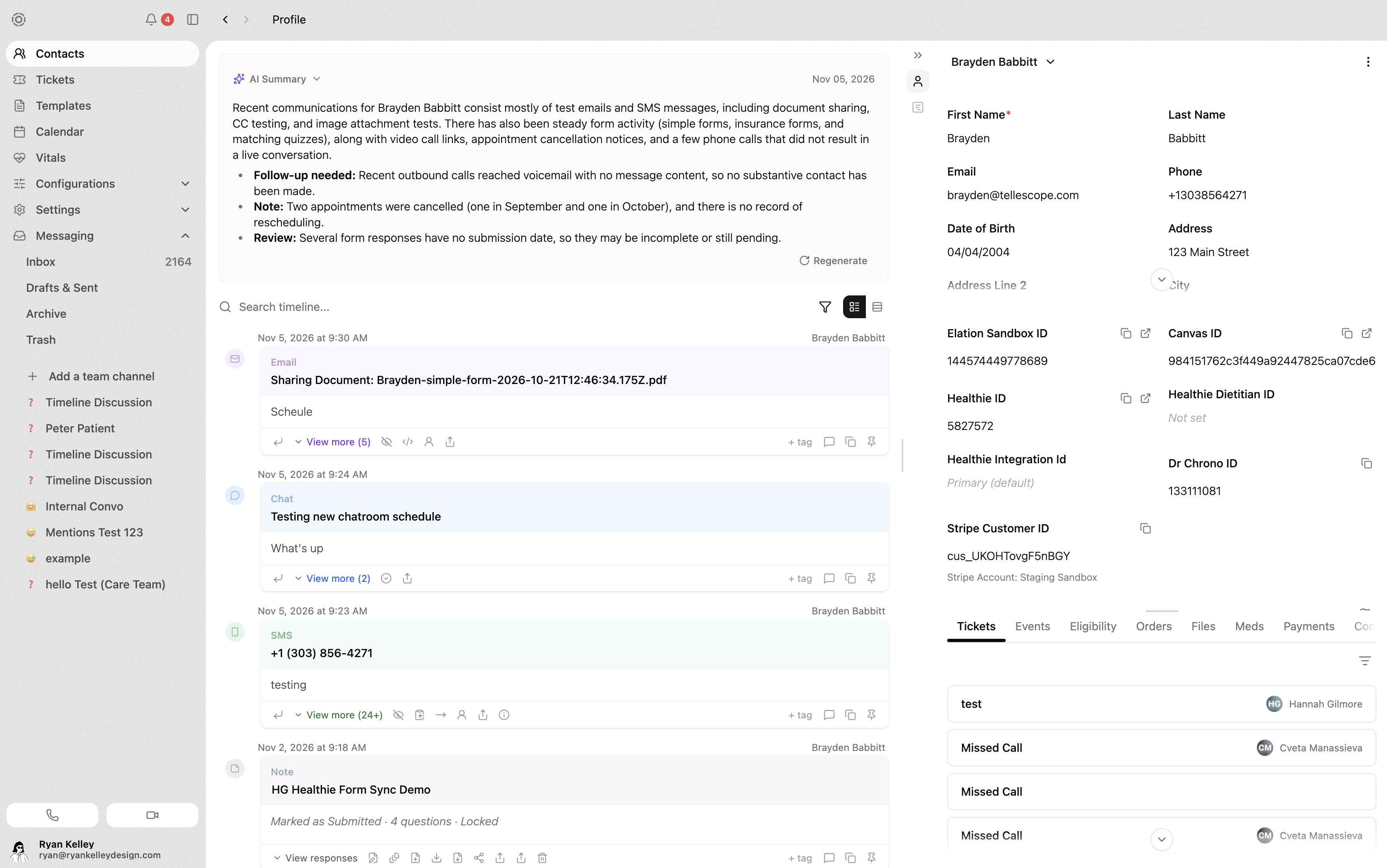
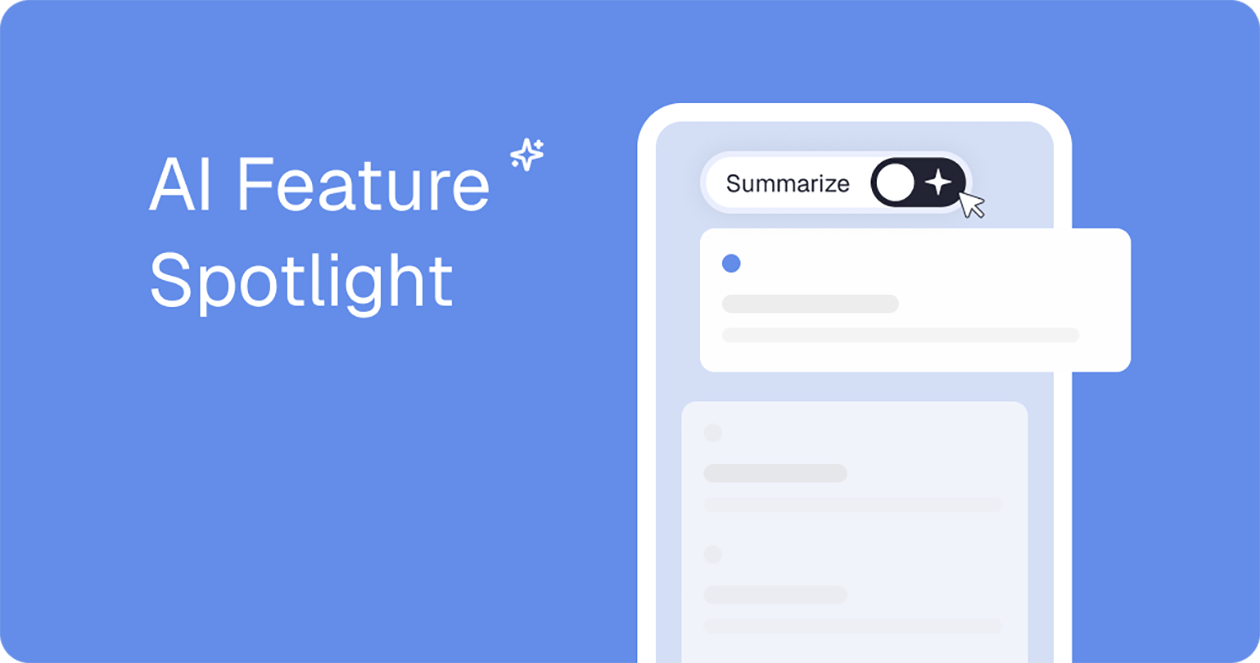
AI Pre-Visit Summary is the newest AI feature in Tellescope, and it's built to shorten that routine. It reviews the parts of a patient's profile your team cares about and places a short summary at the top of the form or visit note a clinician is about to fill out. Instead of digging through the record, they can read a few lines, get reminded of their last few interactions, and start the visit prepared.
In this post, we'll cover how AI Pre-Visit Summary works, who it's built for, and how to start using it in your existing Tellescope workflows.
About AI Pre-Visit Summary
Quick Answer: AI Pre-Visit Summary is a Tellescope AI feature that reviews a patient's profile using the data sources your team selects, then shows a short, prompt-driven summary at the top of a form or visit note. It helps clinicians prepare for a visit without reading through the patient's full record.
Picture a clinician getting ready for a follow-up call. They open the visit note on the patient's profile, often from a ticket tied to the appointment. Before they reach the first field, a summary of that patient is already waiting at the top of the note.
Your team decides what goes into it. AI Pre-Visit Summary can read from:
- Messages and phone calls with the patient
- Form responses, including past intake forms and visit notes
- Medications and orders
- Calendar events, like upcoming and past appointments
- Tickets your team has opened for the patient
- Observations, such as lab results and vitals saved to the profile
- Custom attributes your practice stores on the patient
You also set how far back it looks. The summary can focus on the patient's most recent activity, or you can define a specific timeframe that matches how your team works, like the last 30 days before a monthly check-in.
One detail makes a big difference. AI Pre-Visit Summary works from the structured data stored on the patient's profile instead of a PDF copy of a lab report. A lab result comes through as the actual observation and its value, and a medication list comes through as the answers the patient gave on a form. That means the summary is built on the same records your team already relies on, and the underlying data is always there to pull up again.
Depending on your prompt, a summary can include:
- Clinical symptoms and current state of health, based on recent observations, form responses, and notes
- Patient-reported sentiment, like how the patient seems to feel about their care based on recent messages and calls
- Recent engagement, such as upcoming or missed appointments, open tickets, and completed forms
- Recommendations based on findings, like a follow-up that's still open or a result worth bringing up during the visit
Here's an example prompt a care team might use for pre-visit prep:
That gives clinicians a consistent snapshot they can read in the minute before a call, so they don't have to open each message, result, and form response one at a time.
More than a summary
Since the output follows your prompt, you can ask AI Pre-Visit Summary for analysis, too. A patient experience lead, for example, might want to know how a patient feels about their care based on the tone of their recent calls and texts:
The summary is also a starting point for more questions. Clinicians can ask follow-ups the same way they'd use any AI chat assistant, like "What's changed since this patient's last lab draw?" or "Has this patient mentioned side effects from their current medication?" Tellescope uses Anthropic's Claude models through Bedrock to generate summaries and answer follow-up questions.
Run it as a Journey step
AI Pre-Visit Summary is also available as a step in Tellescope Journeys, our no-code workflow automation builder. When a patient is added to a Journey that includes the step, a summary is generated and saved to their profile. That's helpful when a care coordinator wants a fresh read on a patient before replying to a message, and there's no visit note open yet.
AI Pre-Visit Summary vs. AI Form Response Summary
Tellescope has two summary features, and each one fits a different moment in your workflow. AI Form Response Summary reads one submitted form. AI Pre-Visit Summary reads across the patient's whole profile.
Key Highlights
- Available on every form: turn it on for the visit notes and forms your clinicians open most.
- You pick the data sources: messages, calls, form responses, medications, orders, appointments, tickets, observations, and custom attributes.
- Adjustable timeframe: summarize recent activity or a window of time you define.
- Built on structured data: summaries pull from the actual values saved on the profile, like individual lab observations and medication entries.
- Goes past a recap: prompts can ask for patient sentiment, open follow-ups, or any other analysis that's useful to your practice.
- Follow-up questions: ask about any part of the patient's history in plain language.
- Works inside Journeys: generate a summary on the patient's profile as part of an automated workflow.
- Set up for your practice: there's no one-size-fits-all template, so each team decides what its summary covers.
Built for Care Teams Running Back-to-Back Visits
We built AI Pre-Visit Summary for a high-volume customer with a clear goal. Their typical visit took about 30 minutes, and clinicians often spent extra time before each call getting prepared and after it documenting the encounter. Some of that work spilled into the end of the day, when clinicians were catching up on notes from earlier calls.
They wanted to bring visits down to 15 minutes so their team could see more patients and provide more care, without lowering the clinical bar they hold themselves to.
Cutting a 30-minute visit to 15 minutes means a clinician could, in an ideal world, see twice as many patients in a day.
Prep time was a big piece of that gap. With AI Pre-Visit Summary sitting at the top of the visit note, the time their clinicians needed to get ready for each call went down significantly. Clinicians also went into calls with the information that mattered most, without getting distracted by unrelated details documented elsewhere in the system.
Their experience lines up with what research shows about where clinician time goes. In a time and motion study published in the Annals of Internal Medicine, physicians spent 27% of their office day on direct face time with patients and 49.2% on EHR and desk work. That's nearly two hours at a screen or desk for every hour spent with patients. A separate 2020 study of about 100 million outpatient encounters found that reviewing the patient's record took an average of 5 minutes and 22 seconds per encounter, more than any other EHR task.
That review time is exactly what AI Pre-Visit Summary is designed to shrink.
Review gets harder when a patient's information lives in several systems. Clinical history might come from an EHR like Healthie, prescriptions might run through ScriptSure, and older records might arrive as PDFs that Docsumo turns into structured data. When that information syncs into Tellescope through our EHR and partner integrations, AI Pre-Visit Summary can bring it into one overview alongside the patient's messages, calls, and form responses.
It's a strong fit for programs where clinicians see a lot of patients and need a quick read on each one. It also helps with handoffs, since a care coordinator or covering provider can catch up on a patient they haven't met before stepping in.
Summaries are there to speed up review. Clinicians should still confirm key details in the source records before making care decisions, and the full profile is always one click away.
How to Get Started
If you're already a Tellescope customer, AI Pre-Visit Summary is available on your forms now. Open the form your clinicians use for visit notes, turn on AI Pre-Visit Summary, pick your data sources and timeframe, and write a prompt describing what your team needs to see.
To generate summaries as part of a workflow, add the AI Pre-Visit Summary step to a Journey. There's no code involved, and you can adjust the setup as your workflows change.
If you're exploring AI-native platforms for patient care, book a demo to see AI Pre-Visit Summary on a real patient profile, along with the rest of what Tellescope can automate for your care team.

Learn more about Tellescope
Be up-to-date with the latest digital health resources